
What a Monroe Resident Lookup Confirms
A Monroe resident lookup should never try to force every record into a home address. Each official source describes one relationship to a person. A deed names a party. A tax roll names an owner. Voter rolls, court indexes, city directory listings, vital-event applications, and license files each carry their own role. Some sources are narrow and others are broad. The coverage table spells out what each source contributes and where it stops. Match with care. Use at least two independent, compatible signals. Record the date attached to each source. Then later comparisons hold up.
| Record | What it confirms | Where | Access |
|---|---|---|---|
| County parcel record | Parcel, assessed owner or mailing context | Real Property Tax Service | Property route and map |
| Recorded deed | Grantor, grantee, document date, legal trail | County Clerk | IQS, terminal, microfilm, request |
| Voter lookup | Current registration and polling relationship | Board of Elections | Known-person and address query |
| Court index | Public filing or case role | New York courts | Correct eCourts service |
| City directory | Historical address listing | Rochester Public Library | Scans and library holdings |
| Vital record | Eligible relationship or event evidence | Local registrar or NYS DOH | Eligibility-based request |
Monroe County's strongest sources also offer fallback channels. Clerk material can be requested at the counter, by mail, fax, telephone routing, or the online document form. Library and archive holdings may require an appointment. Vital records provide online, mail, appointment, genealogy, and local-clerk channels, depending on the event.
Start a Monroe Resident Lookup Narrowly
Begin narrowly. Use the least intrusive anchor you have. That means a full name plus a city, town, ZIP, or dated address. Normalize middle initials, hyphens, apostrophes, suffixes, and alternate surname spellings. But keep the record's original spelling in your notes. Then add a time anchor, such as a directory year, deed recording date, court filing year, election cycle, or license status date. One caution from Monroe property work: the postal city, the municipal boundary, and the ZIP can all differ. Keep all three labels with any parcel or GIS result so the address chain stays clean.
- Search the name with one non-sensitive place or time anchor.
- Classify the result as owner, mailing recipient, directory listing, court party, voter relationship, credential holder, or another stated role.
- Find a second official record with a compatible date, place, or record identifier.
- Record contradictions instead of forcing a match between people with the same name.
- Keep the source URL, retrieval date, and access limit for a later recheck.
Two compatible signals beat a pile of untested name-only hits. An old address or a business location can explain a match, but neither one supports a claim of current residence in Monroe.
Monroe Resident Lookup Court Records
New York's Web eCourts is the front door for the court stack. WebCivil Local searches participating local civil cases by index number, party, attorney or firm, judge, and court. It also covers calendar and eTrack connection. WebCivil Supreme covers active and disposed Supreme Court civil cases. WebCriminal, WebFamily, and WebSurrogate each hold different court material. Pick the service that fits the question. Running a party name through a single index is easy. Calling the result statewide coverage is the classic mistake.
| Index field | How to preserve it |
|---|---|
| Index number | Keep punctuation and leading zeroes where the service displays them. |
| Party name | Record the role and exact source spelling. |
| Court and case type | Save the selected court and filter, not just the result name. |
| Year and status | Use them to separate similar matters and to date the result. |
A no-hit only covers the index searched. Courts list sealed records, youthful-offender matters, adoption, Article 81 proceedings, no-future-appearance cases, data lag, and court-specific availability as reasons an item can be missing. A case appearance proves nothing about guilt, full history, or residence.
Monroe Resident Lookup Probate Trail
For an estate, will, guardianship, or probate question, start with the Monroe Surrogate public-record index. Then move to WebSurrogate. The Monroe public index provides year links from 2012 through 2026. WebSurrogate offers name, file, old-index, index-book, and will search modes. Online images stop at an explicit 2014-02-19 boundary. Older material may require the court's public-access route.
A good result note keeps the decedent or filer name separate from the file number, court, date, document type, and image availability. Estate material can identify a lawful heir. It can also document a historical relationship, subject to access restrictions. Never infer a person's address from an estate role.
Open the official WebSurrogate search route before checking any name or file.
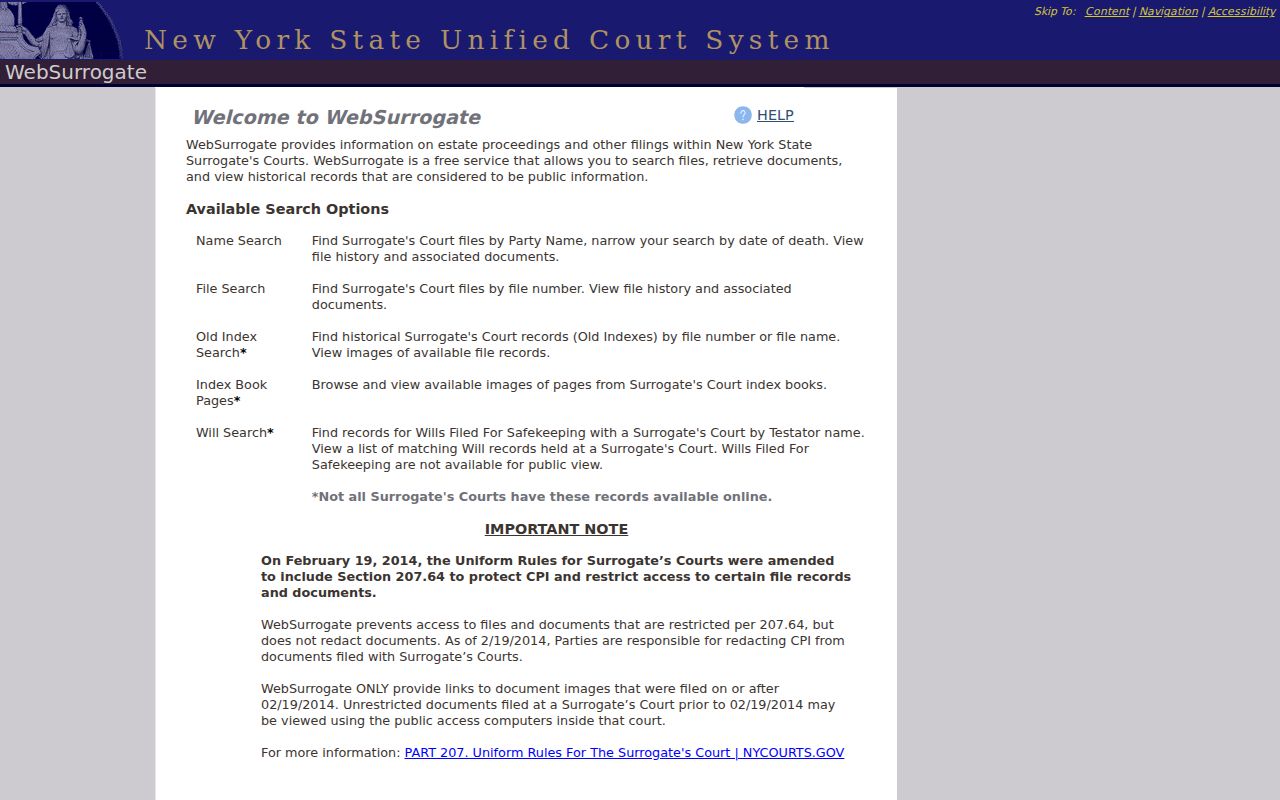
The range of search modes is the point. Name, file, and historical index work belong on three separate Monroe lookup paths.
Monroe Resident Lookup Property Evidence
The Monroe Real Property Tax Service route and its parcel viewer separate the physical parcel from an owner or tax mailing role. Record the situs address, municipality, ZIP context, SBL, and any source-labeled owner or mailing information. Ownership the question? Move to the Clerk's recorded land index. Historical person the question? Pair a dated directory or archive record with the property timeline instead of calling the assessed owner a resident. That distinction keeps the Monroe residents directory honest.
- Grantor
- The party transferring an interest in a recorded deed.
- Grantee
- The party receiving that recorded interest.
- Index versus image
- An index locates a document; the official image or certified copy can have separate access rules.
- Certified copy
- A custodian-issued copy with certification, available only through the stated office procedure.
The Clerk's historical guide splits the route at 1975: digital records after, microfilm or index books before. The Monroe Clerk document request form offers Court, Land, and Other choices, with conditional fields for case, address, book, page, or tax ID, plus certification and pickup or electronic delivery options. For the full address chain, the Monroe street directory method keeps parcel, deed, and historical address evidence in the right sequence.
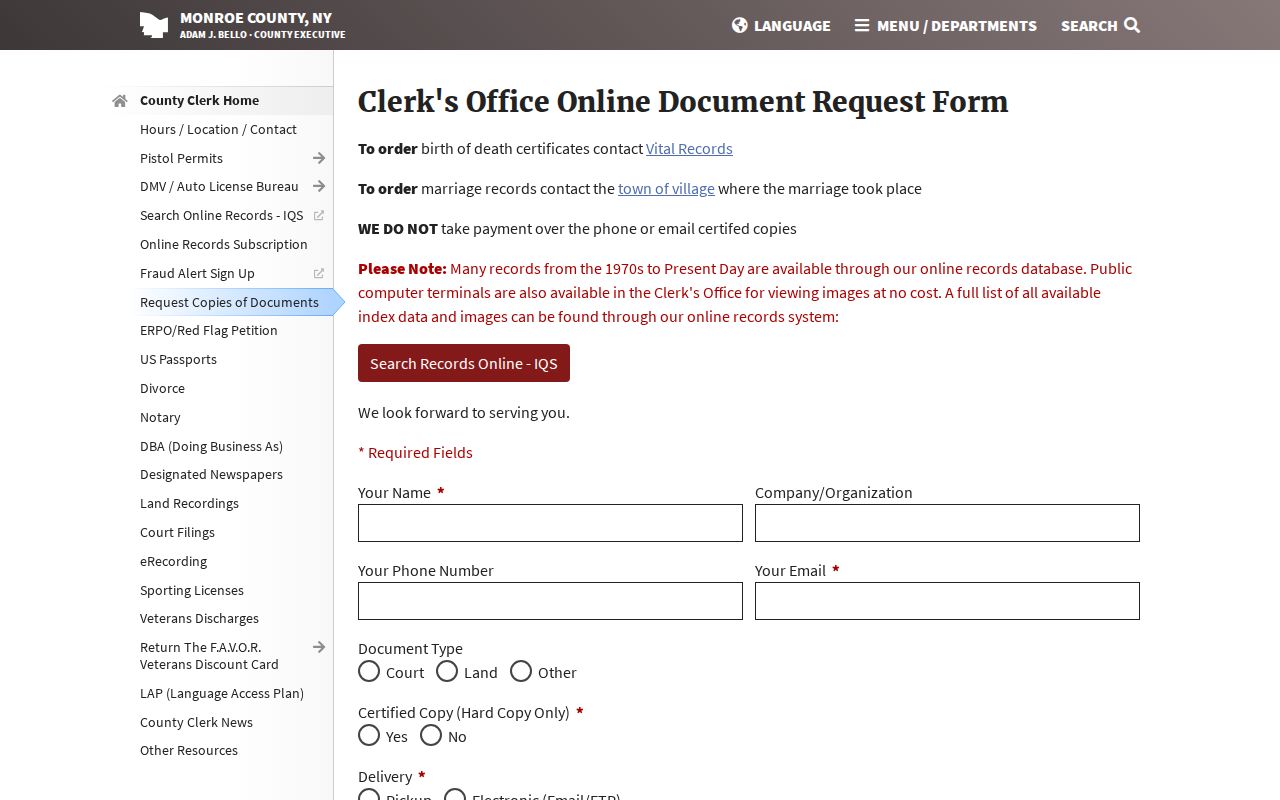
The official request form is the fallback whenever an identified land or court record needs a certified custodian copy rather than a portal result.
Monroe Vital Records Need Authority
Monroe County Vital Records holds local birth and death records dating back to 1880. Access is not open-ended, though. Certified copies go only to people with an eligible relationship or another authorized basis. The county runs several separate channels. These include online ordering, mail applications, appointment access, and a genealogy application. Genealogy requests carry an 8-10 week estimate. The live form and the custodian set the current procedure.
New York's genealogy rules set waiting periods of 75 years for births. Deaths carry a 50-year wait. Marriages wait 50 years where both spouses are deceased. Direct-line descendants and death-proof exceptions can shorten these waits. State birth and death registration outside New York City starts in 1881. Local municipal clerks keep marriage records. The Department of Health holds divorce certificates from 1963 forward. Adoption records stay sealed and move through statutory registry or certificate procedures.
For an eligible birth or death request, use the county's official online order route.
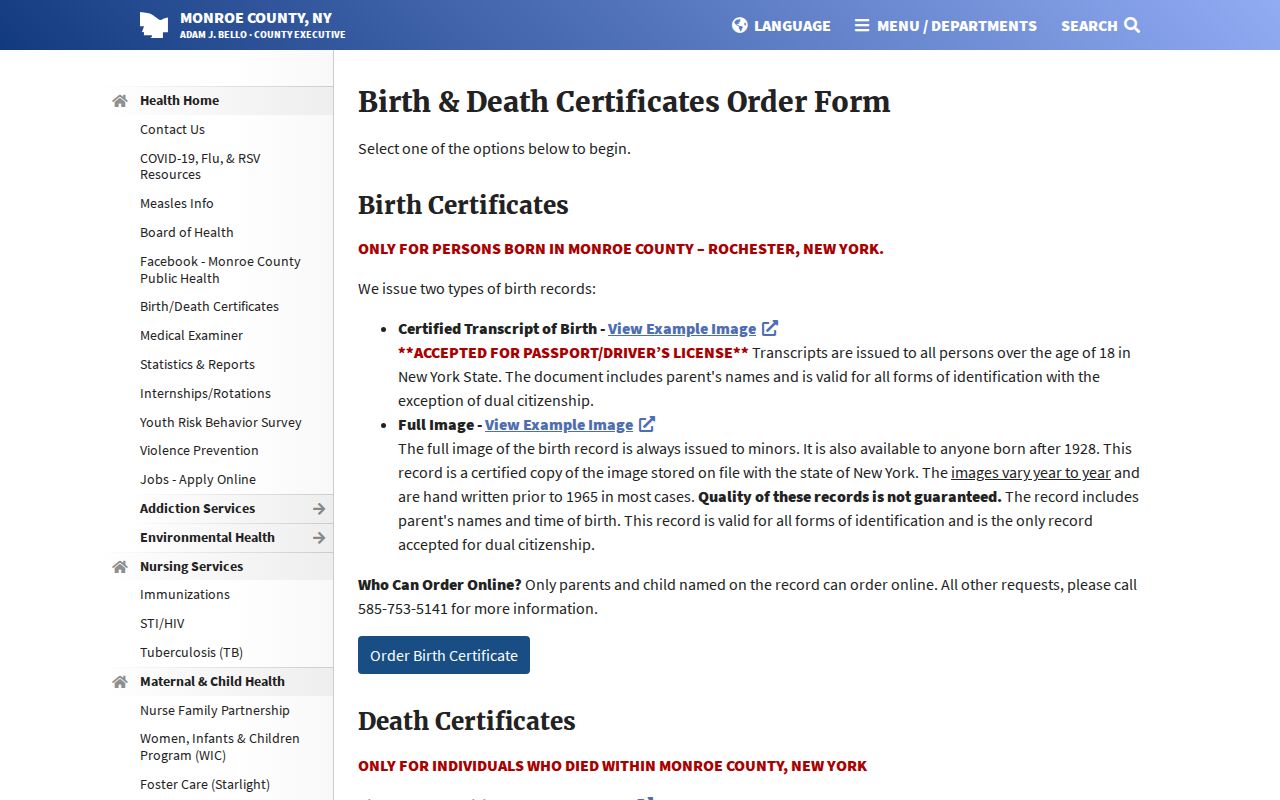
The request screen is part of eligibility screening, not proof that a certificate is open to a name search.
Monroe Resident Lookup License Checks
For a public professional credential, the NYSED online verification searches are the right tool. A residents directory is not a credential source. NYSED lets you search by profession, name, or license number, with discipline-summary information included. New York adds Department of State licensee and business-entity routes, plus an attorney registration search. Match the public status, license number, name, and practice or business location with care.
A credential or business location is not a home address. Its value is confirming a public professional relationship. The name and status should fit the supplied anchor. Keep the displayed profession or license category and the lookup date with the record.
The official NYSED verification page displays the available search choices.
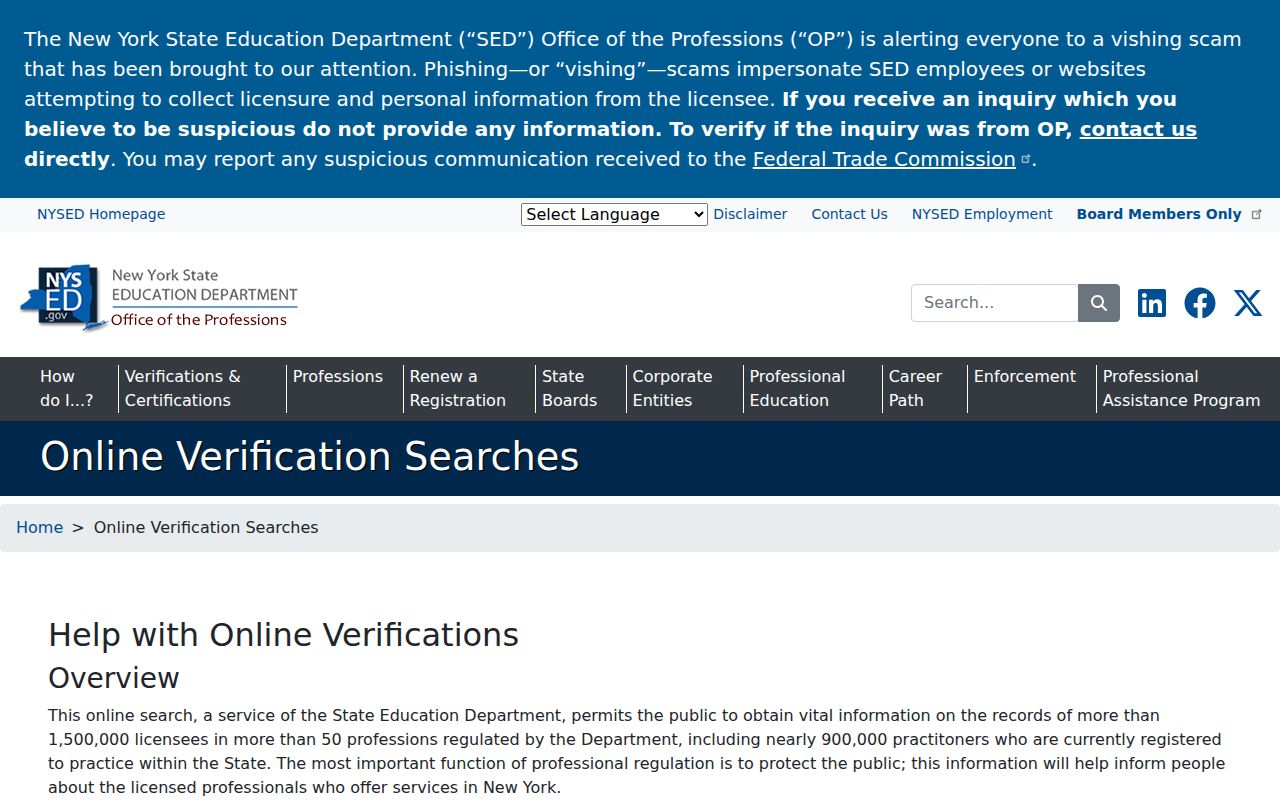
That state tool verifies a credential record, not a private location.
Monroe Resident Lookup Election Checks
The Monroe voter lookup verifies a known person and address for the current election cycle. The form asks for Street #, an autocomplete Street Name, Zip Code, Last Name, and Date of Birth in MM/DD/YYYY form. Hit Search when the fields are filled. Results can include registration status, a polling place, and a sample ballot. Absentee or mail-in status and elected officials may also appear. Required-field markers and the static result labels appear only on the live result screen, so check there directly.
Treat a voter result as a current election relationship only. Never publish a date of birth, protected identifiers, or confidential-voter details. Polling places, ballots, and districts shift between election cycles. Preserve the result date, and compare the address against the county parcel and USPS context.
Use the official Monroe voter screen only after confirming the supplied address and person.
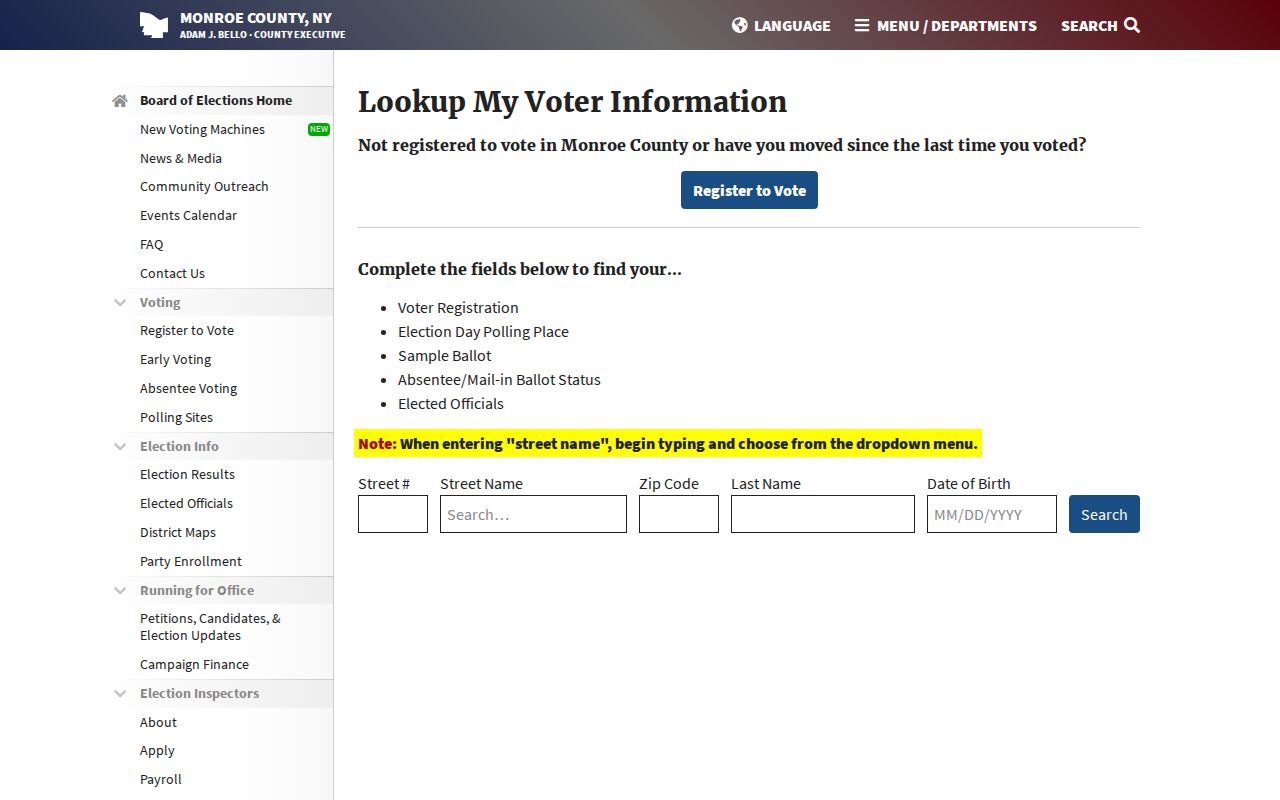
The controlled form is one reason to keep a query narrow. Treat any returned status as time-specific.
Legal Limits on a Monroe Resident Lookup
New York FOIL, Public Officers Law §§84-90, covers existing agency records and allows exemptions. It never forces an agency to build a resident list. Court files answer to Judiciary Law §255. They are not subject to a county FOIL request. Election Law §5-508 protects confidential voter registrations. The New York Address Confidentiality Program gives eligible participants a legal substitute address. Vital, adoption, and sealed court material carry separate restrictions of their own.
If the official search returns nothing, try an exact variant spelling, a municipality rather than a postal city, an earlier year, or the relevant custodian. An absence never supports speculation about a person. State the coverage gap plainly and preserve the official source checked.